How it Works
Tiers & Funding
How it Works
The single most effective tool of the fellowship is the recurrent one to one meeting: a private video-call between fellow and faculty member to review most recent scans and cases from the fellow's practice.
With 12, 24 or 48 meetings (dependent on tier selected), an upward spiral of progression throughout the fellowship is established.
1. Read, Scan, Record
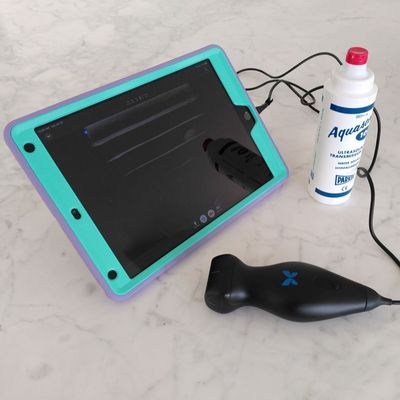
Learn a new scan, try a new scan! Record your efforts (and struggles), and archive to one of the educational databases we use.
Each fellow owns their own personal probe, so they can scan anywhere, any time, untethered from a specific location or machine. Capturing 20 windows each week is a cinch!
2. Review with Faculty
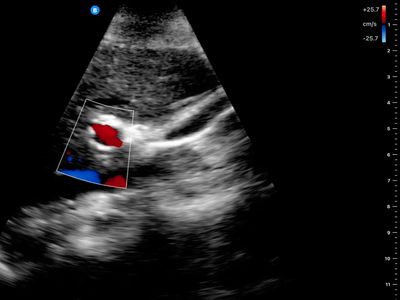
Meet with one of our world renowned expert faculty and review your most recent scans.
Book a one-to-one virtual meeting according to your schedule, and receive direct, targeted feedback on how to improve your ARC (Acquisition, Reading and Clinical integration.)
3. Rinse and Repeat
Armed with the tips, tricks and confidence you just acquired, go back to step one.
Even the most stubborn PoCUS scans are learned with just a few iterations of this cycle.
From there we add more and more sophistication until you reach mastery.
Front Burner ➜ Back Burner ➜ Shelf
While learning potentially dozens of new PoCUS applications, things could easily become overwhelming. To stay organized, we recommend this cooking-inspired strategy:
- Two to three front burner scans each week. Scans that are new and top priority to learn.
- Various back burner scans. Scans that are becoming familiar but not fully crystalized.
- Collection of comfortable scans that now reside on the shelf.
For example, a fellow is learning...
Virtual works?
Yes, it really does, and not just for the RUF either! Longitudinal, asynchrous virtual PoCUS education is working exceptionally well in a Canadian rural family medicine residency. Check out the article for yourself.
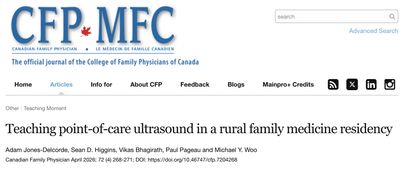
Virtual works!
Choose Your Tier
Unsurprisingly, how far one advances during a fellowship is linked to the time they invest.
All tiers are equivalent in terms of equipment, self-learning content, assignments and group activities over the fellowship. The only difference is the number of one-to-one meetings during the year. That is how many iterations of feedback & growth, and how much knowledge a fellow wishes to gain from our expert faculty.
All tiers offer fantastic learning and great value. Which option you choose depends on your level of interest and learning objectives.
Advanced PoCUS Training
(mini fellowship)
12 mtgs / year
Our introductory tier is proven to produce advanced ultrasound users with superior knowledge, experience and confidence many times beyond what is achievable through conventional PoCUS courses and bootcamps. Anticipate being in the top 10% of PoCUS trained practitioners after completing this year of training.
Ultimately, this is a mini-fellowship option with the smallest time requirements. Participants receive the same comprehensive didactic exposure as the other tiers, but this level of clinical education and expert-supervision is below the threshold of a true ultrasound fellowship.
This is very well suited for those PoCUS users with targeted learning objectives, such as anesthesiology-relevant nerve-block PoCUS or maternity PoCUS. It is also the most suitable choice for the budget conscious or time-limited practitioner who wishes to further advance their scope of ultrasound skills and practice.
Ultrasound Fellowship
(core) - most popular
24 mtgs / year
If you are here because you're looking for a true fellowship, then this is the tier you should consider first. The core fellowship tier will allow you to become a very strong point of care ultrasound user, confident with advanced as well as new & emerging ultrasound techniques by the end of your program.
Our most popular tier, this is a great choice if you wish to become regional expert in bedside ultrasound. This is especially useful if you have a strong desire to teach or support PoCUS uptake & adoption among colleagues.
This full-fellowship option meets the criteria of a true ultrasound fellowship. Although we do not typically recommend this for most of our alumni, you will be qualified to challenge the RDMS examination, should you wish to do so.
Ultrasound Fellowship
(exhaustive)
48 mtgs / year
Go big, or go home, is your motto. Bedside ultrasound, your passion. You want to learn as much as you can, and leave no sonographic stone unturned (renal, biliary, salivary or otherwise). You recognize the value of an internationally recognized expert faculty and you want to soak up every possible iota of information during your fellowship.
This top tier option is for providers seeking an exhaustive knowledge and mastery of bedside ultrasound, well beyond traditional emergency medicine indications, and expanding into enhanced diagnostic understanding and capabilities.
You will be very qualified to challenge the RDMS examination, should you wish to do so, and you will be qualified to join the national or international stage of bedside ultrasound leaders and educators.
Funding
Funding is dependent on where fellows live and practice. This section contains a list of potential sources by region, which past fellows have successfully utilized. (Presumed to be still available to eligible providers).
Additions or corrections are greatly appreciated!
Australia 🇦🇺
New South Wales: TESL
Training, Education Study Leave (TESL) for doctors. Visit www1.health.nsw.gov.au and search TESL for the latest policy directive.
Rural: SRSA
Support for Rural Specialists in Australia (SRSA) Program
We run an biannual grants program that awards rural, non-GP specialists up to $12,000 to access high quality CPD and networking that suits their individual needs. We recognise the unique scope and value of rural medical practice and also provide online learning on relevant topics and themes.
Visit ruralspecialist.org.au to learn more.

Canada 🇨🇦
Alberta: RHPAP Education Grants
Visit
rhpap.ca
or email info@rhpap.ca for more information.
The Rural Health Professions Action Plan (RHPAP) offers education grants for eligible rural health professionals in Alberta:
- Physician Skills Enrichment Grant Program: CME funding for eligible rural physicians.
- Rural Education & Advanced Learning (REAL) Program: CME funding for eligible rural nurses and allied health professionals.
British Columbia: REAP
Visit rccbc.ca or email REAP.Physicians@ubc.ca for more information.
College of Family Physicians of Canada: FAFM
Annual bursaries available, such as:
- Hollister King Rural Family Practice CPD Grant: supports academic and community-based ... CFPC members who are actively practising in a rural setting and wish to carry out CPD activities...
Visit fafm.cfpc.ca for more information.

Self-Pay
Designed for affordability.
Countless regional funding schemes, CME alotments and community bursaries exist and have been successfully applied by fellows to their RUF tuition. Nevertheless, in the end some practitioners are unsuccessful and decide to pay the tuition themselves.
Rest assured that the RUF was intentionally designed and is operated using a cost-recovery model, with the priority to keep costs as low and maximally affordable as possible.