Program Overview
& Curriculum
Program Highlights
The RUF was designed specifically for practitioners in active practice.
Delivered Virtually

You live and work in your community by choice! We know the challenges of accessing CME (particularly longitudinal training), without the need to leave home and disrupt your practice. That's why our fellowship is delivered 100% online.
- Learn in your own community
- Stay close to family and colleagues
- Keep working without interruptions
Within the first month, most fellows are already commenting on how their fellowship has begun to enhance their day to day practices.
Exceptional Flexibility

Our asynchronous, year-long format puts you in control.
- Study and practice according to your own schedule
- Receive curated readings, live and recorded video lectures every month, following our comprehensive PoCUS curriculum
- Prioritize topics based on your personal interest and practice style
- Reinforce your knowledge with spaced repetition and a variety of other educational techniques
World-Class Faculty
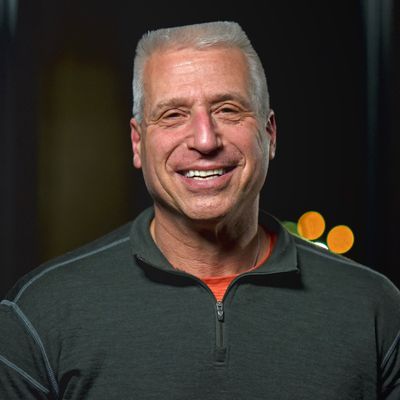
Learn from expert ultrasound educators well-known on the global PoCUS stage. Faculty backgrounds include:
- Anesthesiologists
- Emergency Physicians (rural, community & academic)
- Intensivists
- Maternity Experts
- Radiologists
- PoCUS Researchers
- Physiatry & Sports Medicine Specialists
- Rural Generalists
- QA-Program Designers
Our diverse faculty combines academic expertise with real-world experience, to keep training relevant and current.
Sonographic Mastery
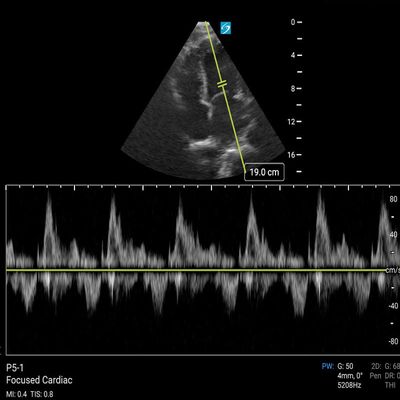
The program builds and transitions fellows through three stages:
- Months 1 – 4:
Review and solidify foundational and intermediate scans -
Months 5 – 8:
Introduce advanced concepts and new scan windows -
Months 9 – 12:
Specialize in areas most useful to your practice (e.g. advanced echo, abdominal diagnostics, fetal-maternal, regional nerve blocks, etc)
Learning Objectives
During the program, fellows will be expected to:
- Improve image generation abilities
- Recognize sonographic anatomy & pathological variances
- Adjust clinical application for variances according to patient context
- Be familiar with PoCUS governance and quality assurance
- Enhance ability to provide PoCUS education to others
- Be familiar with how to create PoCUS research questions
- Adjust self learning to ever changing patient pathology and presentations
Fellowship Curriculum
Our comprehensive program goes far beyond the basics, addressing every major application of PoCUS.
Foundational Concepts
An efficient review of key concepts to ensure all fellows have a strong foundational understanding.
- Physics: ALARA, frequency, mode, depth, gain, callipers
- Abdomen: aorta, FAST, GB
- Cardiac: pericardial effusions
- Lung: pneumothorax, pleural effusions
- Uro/Gyne: IUP, bladder volume
- Procedures: peripheral vein/artery access
- Craft Corner: learn to build your own procedural phantom for practice or for teaching others
Intermediate Progression
Building on the fundamentals, more advanced concepts and extensions are introduced.
- Physics: doppler (colour, power), aliasing, dynamic range
- Abdomen: hydronephrosis, portal triad, pylorus, intro to epigastrium
- Cardiac: PSL, PSS, A4C, LV function, RV dilation
- Integument: cellulitis, abscess, lymph nodes, granulation tissue
- Lung: pulmonary edema, subpleural changes, consolidations
- MSK: common joint dislocations, effusions, bursitis
- Ocular: globe rupture, pupillary assessment, retinal/vitreous pathology, elevated ICP screening
- Procedures: forearm nerve blocks, CVCs, common joint injections/aspirations
- Vascular: IVC, DVT, JVP
Advanced Mastery
Fellows are encouraged to focus on the areas of particular interest, most relevant to their practice.
- Physics: pulsed-wave, tissue & continuous-wave doppler
- Abdomen: pancreas, CBD, advanced bowel pathology, appendicitis
- Cardiac: EPSS, FS, diastology, valve assessment, TAPSE
- MSK: fractures, tendon/ligament injuries, rotator cuff(optional comprehensive MSk diagnostics for sports med)
- Nerve Blocks: SCP, ESP, femoral, posterior tibial, (optional advanced blocks for anesthesiologists)
- Obstetrics: fetal lie, biometry, placental position, cervical length, AFI
- Procedures: trigger finger, SI and other advanced joint injections
- Vascular: TCD, carotid flow, renal perfusion, portal flow, VExUS
Didactic Resources & Schedule
The RUF curriculum is taught through a strategically designed self-study syllabus. In addition to the one to one meetings, delivery modalities include:
- assigned reading (electronic text books & relevant literature)
- video lectures & demonstrations
- periodic virtual group meetings
- regular asynchronous case discussion & teaching in our private virtual community
All resources are included with tuition, with the exception of one of the electronic textbooks. (~$40 CAD)
Assignments are coordinated through a monthly self-study schedule. Our flexible schedule starts with a review of basics, to identify and address any knowlege gaps. We then progress in a cyclic fashion revisiting past topics for spaced repetition, while building upon the foundations with more and more sophisticated concepts until mastery is achieved.
Historically, our self-study curriculum has been very popular among our fellows. Anticipate investing 5-10 hours per month depending on your level of interest and the relevance to your practice.
Deeper Dive: spaced repetition & other key PoCUS learning strategies
How to Effectively Learn Ultrasound
This 15 minute video discusses the importance of spaced repetition and mentorship while learning PoCUS, as well as the [evidence-based] pros/cons and optimal timing to switch from live/classroom products to virtual-based programs.
If you're motivated to learn PoCUS for real, and as efficiently as possible, don't miss this video.