Fellowship  Prerequisites

1

Minimum Prior PoCUS
Training & Experience

What's your skill level?
Notice:

The RUF is intended for PoCUS users with a solid foundation in bedside ultrasound.

Practitioners with insufficient skill or experience are best served through additional hands-on training prior to undertaking a fellowship.

Applicants must be comfortable with a minimum of 4 different clinical PoCUS indications.

For example, four or more of:

FAST
Pneumo­thorax
Gallbladder
Intra­uterine Pregnancy
Aortic Dilation
U/S Guided Procedures
Joint Effusions
Nerve Blocks
IVC
Pericardial Effusions
Subxiphoid Heart
etc...

Note:

  • Binary assessment or procedural competence, in each sonographic window / anatomic location is sufficient, however familiarity with a variety of windows is necessary. For example, assessing LV function, pericardial effusion, Aortic diameter & WMA, all from the parasternal long axis is excellent, but should be considered as a single window for this evaluation.
  • Applicants do not need to be perfect in their technique, but should scan with sufficient skill & confidence to be able to apply PoCUS findings clinically, in at least 75% of recent cases.
Rationale:
The bedside ultrasound learning pathway, from absolute-beginner to comprehensive expert, requires early understanding of basic probe manipulations knobology. It is extremely difficult to learn these skills in isolation or with only virtual support. In-person courses, workshops or mentoriship, where an experienced instructor provides direct feedback on correct manipulation of the probe is far more effective at early stages of learning.
2

Internet Access

This 100% virtually delivered program requires regular video-conferences and realtime sharing of video. A robust high speed internet connection is essential.

Many health facilities provide internet access, yet often certain websites and services are arbitrarily blocked or restricted. This may make video conferencing difficult or impossible. Similarly, archiving and accessing images using educational platforms like Sonoclip Share may be impossible on hospital-provided wifi.

It is important to have access to a reliable internet connection without restrictions. This can be a challenge in certain isolated locations, and several of our fellows have switched to satellite-based internet as a result. We encourage you to be aware of these limitations and know your options prior to applying.

3

Hardware Requirements

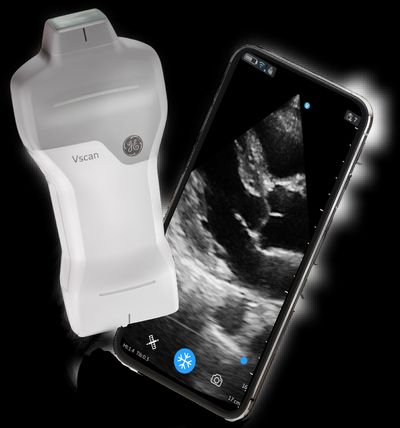
It is a prerequiste of the RUF that fellows own their own personal probe. Fellows are welcome to use any personal device they wish for the program provided they can:

  1. access their device(s) wherever and whenever they are working during the fellowship.
  2. record and upload clips to a secure educational archive service, (e.g. sonoclipshare.com), or a proprietary archive service (e.g. Butterfly Cloud), thus facilitating sharing of images with faculty.

See the hardware section for the RUF's review on the most popular personal-ultrasound options currently avaiable.

Rationale:
To get the most out of the fellowship, we strongly recommend each fellow acquire a personal 'all in one' probe. This enables fellows to scan anywhere, anytime with a full probe and feature set.

Hospital or clinic provided machines may not have a full set of probes (curvilinear, linear & phased), and often do not have all software packages unlocked (e.g. pulsed wave doppler or maternity measurements etc.)

If a probe or machine breaks, there are usually considerable delays associated with repair or replacement that are beyond the fellow's control. These delays have had a significant impact on some fellows' education in the past.

Hospital machines tend to be larger and it can be difficult or forbidden to take them to another care area on another floor, let alone a different building or the fellow's home for practice.

Exporting recorded clips from a cart-based machine is more involved and less intuitive, leading to minor delays and extra work. Some institutions add additional security measures or hurdles affecting the downloading of clips. On the other hand, personal probes permit fellows to share and post directly into the fellowship forums for near-immediate feedback.

The RUF is a fan of access to cart-based machines, because of their superior resolution which is valuable later in the fellowship process. Additionally, there is a big benefit to learning on multiple hardware systems. This helps drive home various knobology and physics concepts by learning how various manufactures choose to implement features differently. Access to cart based systems leads to a stronger fellowship experience and greater expertise.

Ultimately we view access to hospital-provided systems as an augmentation to the fellowship, not a default option to be relied upon.

If any doubt remains as to the value of a personal probe, it is always possible to sell a personal probe once the fellowship is complete. That said, to date, not one of our fellows has opted to do so citing the [surprising], value of owning one's own personal probe.